
Project · 2025
CAMS Decision Module + AI
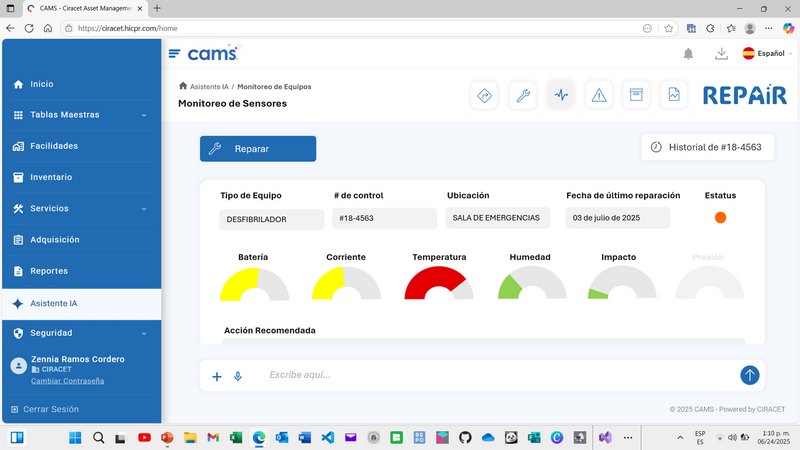
A proposed AI module for CAMS v7 that analyzes repair histories, predicts failures and gives biomedical technicians data-driven recommendations to reduce downtime.

Purpose
This project proposes an AI module for CAMS v7 to analyze repair histories, detect patterns, and deliver data-driven recommendations, improving response time, repair accuracy, and equipment availability.
Objectives
- Centralize and structure historical data. Integrate into CAMS a repository of historical data related to repairs, maintenance, and biomedical equipment management.
- Implement an AI model. Use machine learning algorithms to identify recurring patterns and generate recommendations during the repair process.
- Optimize decision-making. Provide intuitive tools to assist biomedical technicians in selecting data-driven actions for each piece of equipment.
- Improve operational efficiency. Reduce average repair time and increase accuracy in identifying failures and solutions.
- Validate the module's usefulness. Conduct pilot tests to ensure the module meets end-user expectations and provides tangible value.
Outcome and Impact
The project integrates AI tools—such as neural networks, logistic regression, and decision trees—into the CAMS platform to analyze maintenance data, predict failures, and support technicians with actionable insights. Implementation requires IoT integration, system compatibility, and compliance with regulations like HIPAA and the 21st Century Cures Act. While AI improves efficiency, final decisions remain with clinical staff to ensure safety.
By merging AI analytics with CAMS, the solution enhances preventive maintenance, reduces downtime, and strengthens biomedical equipment management.
Have a question, idea, or looking to connect?